

€0.36
- There are no more items in your cart
- Shipping
- Total €0.00
- DIVE GEAR
- Casual Dive Wear
- Accessories
- Freediving Accessories
- Neoprene Accessories
- Buoys and Lift Bags
- Cylinders
- Scuba Gear Bags & Cases
- Compressor
- Regulators
- Scuba Hoses
- Foto e video
- BCD
- Light
- Dive Mask
- Wetsuit
- Dry Suit
- Fins
- Rebreather
- Side Mount
- Snorkeling
- Dive Computers & Instruments
- Dive Propulsion Veichle
- COURSES
- REPAIRS

Reference: R6RONT
Brand: Scubatec
Teflon Washer For Scuba Valve
TEFLON WASHER FOR SCUBA VALVE
The anti-friction Teflon washer for axis is used in scuba cylinder's valve to reduce the friction between internal components.
€0.55

Reference: 901061025
Brand: SI TECH
Silicone Wrist Seal SI TECH Replacement Dry Suit Seals Silflex
SILFELX SILICONE WRIST SEAL SI TECH Replacement silicone seal for drysuits with quick change wrist systems.Fits Modular Quick Change Solutions: SI TECH Quick Cuff and Antares, Rolock 90, Santi Smart, Waterproof and Scubapro.Silflex silicone seals are available in black or cyan blue.
€15.94
€19.20

Reference: 46010R29
Brand: DIRZONE
Condom Rochester Wide Band For P-Valve Male Silicone Condom External Catheteres
CONDOM ROCHESTER WIDE BAND FOR P-VALVE MALE SILICONE CONDOM EXTERNAL CATHETERES
CONDOM FOR P-VALVE AVAILABLE IN FOLLOWING SIZES:- SMALL (25 mm)- MEDIUM (29mm)- LARGE (32mm)- XLARGE (36mm)
PACKAGE:
Price is for 1 adhesive condom.
€3.20

Reference: 990001
Brand: MIFLEX
Spare Valve For Miflex And Other Inflator Hose
SPARE VALVE FOR MIFLEX AND OTHER INFLATOR HOSESSchrader valve for quick connection of standard inflation hoses
€4.10

Reference: EFILD
Brand: Scubatec
Filter For Scubatec Din First Stage
Filter For Scubatec Din First Stage
€2.10

Reference: SP01
Brand: DIRZONE
Flange Screw Replacement Part For Bcd
FLANGE SCREW REPLACEMENT PART FOR BCD SAFETY DUMP VALVE FOR WING AND ALERT MARKER
Replacement BCD flange for corrugated elbow, safety dump valve for wing and SMB.Can be screw on any textile, no welding required
PACKAGE INCLUDED
- 1 Inside bladder nut- 1 Outside bladder nut- 1 Wing double gasket
€12.88

Reference: FHP150
Brand: Scubatec
HP 7/16 Rubber Gauge Hose for Scuba Diving
HP 7/16 rubber hose for pressure gauge, designed for durability and high-pressure performance in scuba diving.
Compatible with most setups. Explore pressure gauges and regulator accessories.
€18.33
€21.56

Reference: 61021
Brand: MIFLEX
Miflex Xtreme Inflator Hose 3/8 LP for BCD and Drysuit
Miflex Xtreme 3/8” LP inflator hose for BCD and drysuit, designed for maximum flexibility, durability, and safety.
Compatible with most first stages. Explore regulator accessories and scuba setups.
€28.60
€31.78

Reference: 60191
Brand: MIFLEX
Miflex Xtreme 3/8” LP Regulator Hose for Scuba Diving
Miflex Xtreme 3/8” LP regulator hose, designed for maximum flexibility, durability, and safety during diving.
Explore all scuba regulator setups and regulator accessories.
€26.76
€29.73

Reference: C22028
Brand: Coloplast
Condom Per P Valve Preservativo In Silicone Adesivo Conveen Per Pee Valve
CONDOM CONVEEN OPTIMA FOR P-VALVE MALE SILICONE CONDOM EXTERNAL CATHETERES
CONDOM FOR P-VALVE AVAILABLE IN FOLLOWING SIZES:- SMALL (25 mm)- MEDIUM (29mm)- LARGE (32mm)- XLARGE (36mm)
PACKAGE:
Price is for 1 adhesive condom.
€3.20

Reference: VC-BK
Brand: XS SCUBA
Protective Caps For Scuba Valve Xs Scuba - Universal Cap
PROTECTIVE CAPS FOR SCUBA VALVES XS SCUBA - UNIVERSAL CAPUniversal Valve Cap Fits most of scuba valves on the market.Protect the valve outlet of your cylinder with XS scuba PVC caps from dirty and demageNylon cord lanyard included - not attachedAvailable in the following colors:- Black- Blue- Yellow- Pink- Green
€2.40
€6.00

Reference: 10000220
Brand: HALCYON
Halcyon Emdp Snoopy Loops Rubber Band For Harness
HALCYON EMDP SNOOPY LOOPS RUBBER BAND FOR HARNESS
The original Halcyon EMDP rubber band for harness is simply slid onto the harness.
You can fix and secure the backup light with the rubber band.
€1.50

Reference: 66000
Brand: DIRZONE
Bungee Cord 3 - 4 - 5 - 6 - 8 MM Per Meter
BUNGEE CORD Bungee cord for several purposes available in different diameter
€1.54

Reference: R4R
Brand: Scubatec
Spear Axis Complete Scubatec For Scuba Valve
SPEAR AXIS COMPLETE SCUBATEC
€5.72

Reference: 99115
Brand: McNett
Zip Care McNett Lubricant Take Care Of Your Wet and Dry Suit Zipper
ZIP CARE MCNETT TAKE CARE OF YOUR WETSUIT AND YOUR DRY SUIT ZIPPER
€11.07
€12.30
-
Payments

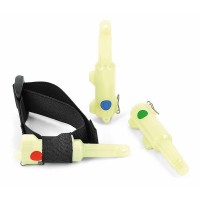
Chemical Lights

Reference: AI0353
Brand: BESTDIVERS
Elastic Bungee For Miniflash Best Divers Elastic Strap
ELASTIC BUNGEE FOR MINIFLASH BEST DIVERS ELASTIC STRAPElastic strap
€7.50

Reference: AI0352RO
Brand: BESTDIVERS
Mini Flash Bestdivers Intermittent Light
MINI FLASH BESTDIVERS INTERMITTENT LIGHT
mini flash light wet contact switch elastic strap 1000 hours 100 m
€13.95
€15.50
Chemical Lights for Diving and Underwater Signaling
Underwater chemical lights provide a simple, reliable and immediate solution for improving visibility, identification and safety during night dives, technical diving and low visibility underwater environments.
Used for years in both recreational and technical diving, chemical lights do not require batteries or electronic systems and provide continuous illumination that is extremely practical in many underwater situations.
At MOMODIVE you will find a selection of chemical lights for diving, underwater marker lights and signaling systems ideal for night diving, cave diving, wreck diving and DIR technical configurations.
Why Use Underwater Chemical Lights?
Chemical lights are highly appreciated for their simplicity, reliability and ease of use. Once activated, they produce continuous light without requiring electrical power.
Chemical lights are commonly used for:
- night diving
- diver identification
- underwater position markers
- safety and signaling
- emergency backup lighting
- equipment identification
- placement on guidelines and cave lines
In technical diving, chemical lights are frequently attached to reels, spools and guidelines to improve orientation and line identification during cave diving and overhead environments.
How Chemical Lights Work
Chemical lights use an internal chemical reaction that produces light once the glow stick is bent and activated.
Main advantages of chemical lights include:
- no batteries required
- instant activation
- high reliability
- lightweight and compact size
- easy transport and storage
- water-resistant construction
Thanks to their simplicity, chemical lights are often used as backup lighting or additional safety markers.
Chemical Lights or Underwater Strobes?
Chemical lights and strobes are often used together, but they provide different characteristics and advantages.
| System | Main Characteristics | Recommended Use |
|---|---|---|
| Chemical Light | Continuous light, simplicity and no batteries | Identification, line markers, guidelines, backup and safety |
| Strobe Light | High-visibility flashing signal | Active signaling, night diving and decompression stops |
Many technical divers use both systems together to increase redundancy and underwater visibility.
Chemical Lights in DIR and Technical Diving Configurations
In DIR and technical diving configurations, chemical lights are commonly used as simple and reliable identification systems.
They can be attached to:
- BCD and harness systems
- stage cylinders
- reels and spools
- SMBs
- guidelines and cave lines
- technical diving equipment
Placing chemical lights on guidelines allows divers to quickly identify navigation lines, exits and underwater reference points during cave and wreck diving.
Chemical Lights for Every Type of Dive
In our catalog you will find chemical lights suitable for:
- night diving
- technical and DIR diving
- cave diving
- wreck diving
- recreational diving
- underwater safety and signaling
Every solution is selected to provide simplicity, reliability and practicality during any type of dive.
Frequently Asked Questions About Underwater Chemical Lights
Do chemical lights work underwater?
Yes. Chemical lights are designed to work perfectly underwater and are widely used in both recreational and technical diving.
How long does a chemical light last?
Runtime depends on the specific model and water temperature, but chemical lights generally last several hours and easily cover the duration of a dive.
Can chemical lights replace underwater strobes?
No. Chemical lights provide continuous illumination and simple identification, while strobes offer active high-visibility flashing signals.
Why use chemical lights on guidelines?
Chemical lights help divers quickly identify cave lines, guidelines and underwater reference points during technical and overhead diving.
Learn More About Technical Lighting and DIR Configurations
- DIR Underwater Lighting: Primary Lights, Backup Lights and Heating Systems Management
- DIR Long Hose: Why 210 cm Is the Standard and How to Configure It Correctly
- DIR Single Tank Configuration: A Practical Guide to Trim, Buoyancy and Safety
- Underwater Strobe Lights and Diving Signaling Systems
Need Help Choosing the Right Chemical Lights?
Every dive requires different signaling and identification systems depending on the environment and diving configuration. Our team can help you choose the best solution for your needs.
Contact us for professional advice on chemical lights for diving and underwater signaling systems.